Although the comments on this blog have ceased, I have not stopped wondering what you all think about certain things. And so I will carry on:
I am interested in comparing and contrasting the treatment of idyllic love in Linklater's 'Before Sunrise' and 'Before Sunset' versus in Malick's 'Days of Heaven' and 'The New World'. Both filmmakers do a wonderful job portraying the beauty and evanescent qualities of love, but it seems to me that they end up in very different places. Both places I find compelling, for different reasons, and I wonder what you guys think.
Saturday, November 8, 2008

Wednesday, September 10, 2008
Wednesday, June 18, 2008
Fresh Air
It seems that we all fell asleep while waiting on the edge of our seats. I suppose that in the absence of Rico's "Brave New World" reply, we should move on.
Speaking of Rico, he and I have had a few conversations about the role of science in truth and philosophy. I have mentally revisited this topic in the past few days after seeing M. Night Shyamalan's "The Happening." Although I felt this movie had its deficiencies, the profundity of certain themes was as sharp as ever for MNS. I am obviously not sure who here has seen the movie, so I will try to be careful.
In the film, Mark Wahlberg is a science teacher who defends and embodies the notion that there are natural phenomena without scientific explanations. He articulates the oft-neglected dichotomy between formulating AN explanation and discovering THE explanation. Theories will always be just that: theories. In other words, we do not know as much as we think we know.
In order to avoid ruining the movie for those who have not seen it, I will leave off referring to more specific instances of these thematic elements in the movie. Yet, this theme resonated with me as it relates to reading I have been doing in the philosophy of mind. The mind/body problem has been around for millenia, but recent advances in the science of mind (neuroscience) has led philosophers to make bold proclamations about what the results of scientific research reveal to us about the world. One philosopher in particular, Paul Churchland, is the leading proponent of a view called 'Eliminative Materialism.' This view more or less denies the existence of consciousness or first-person qualitative states. The apt analogy for justifying this claim would be comparing consciousness to God: it is something mysterious that we have no physical evidence for, and thus it must go!
Now here is the real point of this post: Consciousness is something we all have direct, first-person evidence for. Churchland's claim should seem ridiculous, but his views have certainly caught on in some circles. For some people, science is the SOLE source of authoritative knowledge, and thus, believing in anything MORE is pure superstition. In many cases, such as with the mind, the most popular theories are those that explain data or predict results. But once again, telling A story is not the same as telling THE story.
Is a hypothesis only worthwhile to the degree that it is useful (e.g. applied science)? What kind of knowledge and truth can we ascertain from science? How can science inform philosophy?
In an interview, MNS said that he found a recent biography of Albert Einstein very interesting. Einstein, said MNS, lost his faith as he sought a purely scientific understanding of the universe. However, Einstein refound his faith once he realized how many holes there are.
Speaking of Rico, he and I have had a few conversations about the role of science in truth and philosophy. I have mentally revisited this topic in the past few days after seeing M. Night Shyamalan's "The Happening." Although I felt this movie had its deficiencies, the profundity of certain themes was as sharp as ever for MNS. I am obviously not sure who here has seen the movie, so I will try to be careful.
In the film, Mark Wahlberg is a science teacher who defends and embodies the notion that there are natural phenomena without scientific explanations. He articulates the oft-neglected dichotomy between formulating AN explanation and discovering THE explanation. Theories will always be just that: theories. In other words, we do not know as much as we think we know.
In order to avoid ruining the movie for those who have not seen it, I will leave off referring to more specific instances of these thematic elements in the movie. Yet, this theme resonated with me as it relates to reading I have been doing in the philosophy of mind. The mind/body problem has been around for millenia, but recent advances in the science of mind (neuroscience) has led philosophers to make bold proclamations about what the results of scientific research reveal to us about the world. One philosopher in particular, Paul Churchland, is the leading proponent of a view called 'Eliminative Materialism.' This view more or less denies the existence of consciousness or first-person qualitative states. The apt analogy for justifying this claim would be comparing consciousness to God: it is something mysterious that we have no physical evidence for, and thus it must go!
Now here is the real point of this post: Consciousness is something we all have direct, first-person evidence for. Churchland's claim should seem ridiculous, but his views have certainly caught on in some circles. For some people, science is the SOLE source of authoritative knowledge, and thus, believing in anything MORE is pure superstition. In many cases, such as with the mind, the most popular theories are those that explain data or predict results. But once again, telling A story is not the same as telling THE story.
Is a hypothesis only worthwhile to the degree that it is useful (e.g. applied science)? What kind of knowledge and truth can we ascertain from science? How can science inform philosophy?
In an interview, MNS said that he found a recent biography of Albert Einstein very interesting. Einstein, said MNS, lost his faith as he sought a purely scientific understanding of the universe. However, Einstein refound his faith once he realized how many holes there are.
Thursday, May 8, 2008
Spoiling Brave New World
I really find the excerpt Duncan posted interesting and extremely relevant to this blog. Now that I'm done with my thesis I'd like to comment...but...
My comment involves discussing the ending of the book. Has everyone here read the book? I know how some people around here get pretty sensitive about spoilers... ;)
My comment involves discussing the ending of the book. Has everyone here read the book? I know how some people around here get pretty sensitive about spoilers... ;)
Friday, May 2, 2008
Brave New World
We have a section of our paper that is the question of the week. A person asks several people a single question. This week it was: “What is the American Dream?” The first answer, which I felt was so telling, was, “To live comfortably.”
Below I have posted portions of chapter 17 in “Brave New World.” You all should read this amazing chapter and the whole book if you can. Chapter 17 is a conversation between a controller of the ‘brave new world’ and a ‘savage,’ who is perhaps a representation of contemporary man, who has archaic beliefs by 'brave new world' standards.
“Art, science–you seem to have paid a fairly high price for your happiness,” said the Savage, when they were alone. "Anything else?"
"Well, religion, of course," replied the Controller. "There used to be something called God.
"But if you know about God, why don't you tell them?" asked the Savage indignantly. "Why don't you give them these books about God?"
"For the same reason as we don't give them Othello: they're old; they're about God hundreds of years ago. Not about God now."
"But God doesn't change."
"Men do, though."
"What difference does that make?"
"All the difference in the world," said Mustapha Mond.
A philosopher—do you know what that was?"
"A man who dreams of fewer things than there are in heaven and earth," said the Savage promptly.
"One of the numerous things in heaven and earth that these philosophers didn't dream about was this" (he waved his hand), "us, the modern world. 'You can only be independent of God while you've got youth and prosperity; independence won't take you safely to the end.' Well, we've now got youth and prosperity right up to the end. What follows? Evidently, that we can be independent of God. 'The religious sentiment will compensate us for all our losses.' But there aren't any losses for us to compensate; religious sentiment is superfluous. And why should we go hunting for a substitute for youthful desires, when youthful desires never fail? A substitute for distractions, when we go on enjoying all the old fooleries to the very last? What need have we of repose when our minds and bodies continue to delight in activity? of consolation, when we have soma? of something immovable, when there is the social order?"
"Then you think there is no God?"
"No, I think there quite probably is one."
"Then why? …"
Mustapha Mond checked him. "But he manifests himself in different ways to different men. In premodern times he manifested himself as the being that's described in these books. Now …"
"How does he manifest himself now?" asked the Savage.
"Well, he manifests himself as an absence; as though he weren't there at all."
"That's your fault."
"Call it the fault of civilization. God isn't compatible with machinery and scientific medicine and universal happiness. You must make your choice. Our civilization has chosen machinery and medicine and happiness…One believes things because one has been conditioned to believe them. Finding bad reasons for what one believes for other bad reasons–that's philosophy. People believe in God because they've been conditioned to.”
"But all the same," insisted the Savage, "it is natural to believe in God when you're alone–quite alone, in the night, thinking about death …"
"But people never are alone now," said Mustapha Mond. "We make them hate solitude; and we arrange their lives so that it's almost impossible for them ever to have it."
"What about self-denial, then? If you had a God, you'd have a reason for self-denial."
"But industrial civilization is only possible when there's no self-denial. Self-indulgence up to the very limits imposed by hygiene and economics. Otherwise the wheels stop turning."
"You'd have a reason for chastity!" said the Savage, blushing a little as he spoke the words.
"But chastity means passion, chastity means neurasthenia. And passion and neurasthenia mean instability. And instability means the end of civilization. You can't have a lasting civilization without plenty of pleasant vices."
"But God's the reason for everything noble and fine and heroic. If you had a God …"
"My dear young friend," said Mustapha Mond, "civilization has absolutely no need of nobility or heroism. And if ever, by some unlucky chance, anything unpleasant should somehow happen, why, there's always soma to give you a holiday from the facts. And there's always soma to calm your anger, to reconcile you to your enemies, to make you patient and long-suffering. In the past you could only accomplish these things by making a great effort and after years of hard moral training. Now, you swallow two or three half-gramme tablets, and there you are. Anybody can be virtuous now. You can carry at least half your mortality about in a bottle. Christianity without tears–that's what soma is."
"But the tears are necessary. Don't you remember what Othello said? 'If after every tempest came such calms, may the winds blow till they have wakened death.'”
"Charming! But in civilized countries," said the Controller, "you can have girls without hoeing for them, and there aren't any flies or mosquitoes to sting you. We got rid of them all centuries ago."
The Savage nodded, frowning. "You got rid of them. Yes, that's just like you. Getting rid of everything unpleasant instead of learning to put up with it. Whether 'tis better in the mind to suffer the slings and arrows of outrageous fortune, or to take arms against a sea of troubles and by opposing end them … But you don't do either. Neither suffer nor oppose. You just abolish the slings and arrows. It's too easy."
"What you need," the Savage went on, "is something with tears for a change. Nothing costs enough here. Isn't there something in living dangerously?"
"There's a great deal in it," the Controller replied. "Men and women must have their adrenals stimulated from time to time."
"What?" questioned the Savage, uncomprehending.
"It's one of the conditions of perfect health. That's why we've made the V.P.S. treatments compulsory."
"V.P.S.?"
"Violent Passion Surrogate. Regularly once a month. We flood the whole system with adrenin. It's the complete physiological equivalent of fear and rage. All the tonic effects of murdering Desdemona and being murdered by Othello, without any of the inconveniences."
"But I like the inconveniences."
"We don't," said the Controller. "We prefer to do things comfortably."
"But I don't want comfort. I want God, I want poetry, I want real danger, I want freedom, I want goodness. I want sin."
"In fact," said Mustapha Mond, "you're claiming the right to be unhappy."
"All right then," said the Savage defiantly, "I'm claiming the right to be unhappy."
"Not to mention the right to grow old and ugly and impotent; the right to have syphilis and cancer; the right to have too little to eat; the right to be lousy; the right to live in constant apprehension of what may happen to-morrow; the right to catch typhoid; the right to be tortured by unspeakable pains of every kind." There was a long silence.
"I claim them all," said the Savage at last.
Mustapha Mond shrugged his shoulders. "You're welcome," he said.
Below I have posted portions of chapter 17 in “Brave New World.” You all should read this amazing chapter and the whole book if you can. Chapter 17 is a conversation between a controller of the ‘brave new world’ and a ‘savage,’ who is perhaps a representation of contemporary man, who has archaic beliefs by 'brave new world' standards.
“Art, science–you seem to have paid a fairly high price for your happiness,” said the Savage, when they were alone. "Anything else?"
"Well, religion, of course," replied the Controller. "There used to be something called God.
"But if you know about God, why don't you tell them?" asked the Savage indignantly. "Why don't you give them these books about God?"
"For the same reason as we don't give them Othello: they're old; they're about God hundreds of years ago. Not about God now."
"But God doesn't change."
"Men do, though."
"What difference does that make?"
"All the difference in the world," said Mustapha Mond.
A philosopher—do you know what that was?"
"A man who dreams of fewer things than there are in heaven and earth," said the Savage promptly.
"One of the numerous things in heaven and earth that these philosophers didn't dream about was this" (he waved his hand), "us, the modern world. 'You can only be independent of God while you've got youth and prosperity; independence won't take you safely to the end.' Well, we've now got youth and prosperity right up to the end. What follows? Evidently, that we can be independent of God. 'The religious sentiment will compensate us for all our losses.' But there aren't any losses for us to compensate; religious sentiment is superfluous. And why should we go hunting for a substitute for youthful desires, when youthful desires never fail? A substitute for distractions, when we go on enjoying all the old fooleries to the very last? What need have we of repose when our minds and bodies continue to delight in activity? of consolation, when we have soma? of something immovable, when there is the social order?"
"Then you think there is no God?"
"No, I think there quite probably is one."
"Then why? …"
Mustapha Mond checked him. "But he manifests himself in different ways to different men. In premodern times he manifested himself as the being that's described in these books. Now …"
"How does he manifest himself now?" asked the Savage.
"Well, he manifests himself as an absence; as though he weren't there at all."
"That's your fault."
"Call it the fault of civilization. God isn't compatible with machinery and scientific medicine and universal happiness. You must make your choice. Our civilization has chosen machinery and medicine and happiness…One believes things because one has been conditioned to believe them. Finding bad reasons for what one believes for other bad reasons–that's philosophy. People believe in God because they've been conditioned to.”
"But all the same," insisted the Savage, "it is natural to believe in God when you're alone–quite alone, in the night, thinking about death …"
"But people never are alone now," said Mustapha Mond. "We make them hate solitude; and we arrange their lives so that it's almost impossible for them ever to have it."
"What about self-denial, then? If you had a God, you'd have a reason for self-denial."
"But industrial civilization is only possible when there's no self-denial. Self-indulgence up to the very limits imposed by hygiene and economics. Otherwise the wheels stop turning."
"You'd have a reason for chastity!" said the Savage, blushing a little as he spoke the words.
"But chastity means passion, chastity means neurasthenia. And passion and neurasthenia mean instability. And instability means the end of civilization. You can't have a lasting civilization without plenty of pleasant vices."
"But God's the reason for everything noble and fine and heroic. If you had a God …"
"My dear young friend," said Mustapha Mond, "civilization has absolutely no need of nobility or heroism. And if ever, by some unlucky chance, anything unpleasant should somehow happen, why, there's always soma to give you a holiday from the facts. And there's always soma to calm your anger, to reconcile you to your enemies, to make you patient and long-suffering. In the past you could only accomplish these things by making a great effort and after years of hard moral training. Now, you swallow two or three half-gramme tablets, and there you are. Anybody can be virtuous now. You can carry at least half your mortality about in a bottle. Christianity without tears–that's what soma is."
"But the tears are necessary. Don't you remember what Othello said? 'If after every tempest came such calms, may the winds blow till they have wakened death.'”
"Charming! But in civilized countries," said the Controller, "you can have girls without hoeing for them, and there aren't any flies or mosquitoes to sting you. We got rid of them all centuries ago."
The Savage nodded, frowning. "You got rid of them. Yes, that's just like you. Getting rid of everything unpleasant instead of learning to put up with it. Whether 'tis better in the mind to suffer the slings and arrows of outrageous fortune, or to take arms against a sea of troubles and by opposing end them … But you don't do either. Neither suffer nor oppose. You just abolish the slings and arrows. It's too easy."
"What you need," the Savage went on, "is something with tears for a change. Nothing costs enough here. Isn't there something in living dangerously?"
"There's a great deal in it," the Controller replied. "Men and women must have their adrenals stimulated from time to time."
"What?" questioned the Savage, uncomprehending.
"It's one of the conditions of perfect health. That's why we've made the V.P.S. treatments compulsory."
"V.P.S.?"
"Violent Passion Surrogate. Regularly once a month. We flood the whole system with adrenin. It's the complete physiological equivalent of fear and rage. All the tonic effects of murdering Desdemona and being murdered by Othello, without any of the inconveniences."
"But I like the inconveniences."
"We don't," said the Controller. "We prefer to do things comfortably."
"But I don't want comfort. I want God, I want poetry, I want real danger, I want freedom, I want goodness. I want sin."
"In fact," said Mustapha Mond, "you're claiming the right to be unhappy."
"All right then," said the Savage defiantly, "I'm claiming the right to be unhappy."
"Not to mention the right to grow old and ugly and impotent; the right to have syphilis and cancer; the right to have too little to eat; the right to be lousy; the right to live in constant apprehension of what may happen to-morrow; the right to catch typhoid; the right to be tortured by unspeakable pains of every kind." There was a long silence.
"I claim them all," said the Savage at last.
Mustapha Mond shrugged his shoulders. "You're welcome," he said.
Wednesday, April 30, 2008
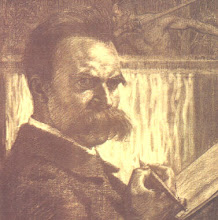
John Mark Reynolds and Nietzsche: The Paschal Showdown
This is a transcript of the Paschal luncheon conversation concerning Nietzsche at St. Michael's.
At Pascha, as the tobacco smoke was billowing, I started pouring shots of ouzo for everyone. John Mark Reynolds started qouting Plato. I was confused, and I said, "What was that?"
JMR: Sorry, I always start quoting Plato when I'm drinking.
Me: Well, I start quoting Nietzsche when I am drinking, so we can have it out right now.
JMR: That might be interesting, if Nietzsche said anything worth remembering.
He had syphillis.
Do you have syphillis?
Maybe that's why you like him. (my paraphrase)
Everyone: Ooooh, Matt got burned by JMR. Nietzsche sucks. Yeah for Plato and booo for Nietzsche. (my extensive paraphrase)
Me: [quoting Nietzsche] "Brave, unconcerned, mocking, violent-- thus wisdom wants us. For she is a woman and always loves only a warrior."
JMR and Thomas Llezo: Oh, that's pretty good. I like that.
Commentary and question: It seems that many Christians enjoy relishing in the fact that Nietzsche went insane at the end of his life. This serves as a convenient sidestep for dealing with the difficulties which Nietzsche presents, which seems to be the impetus for this blog. I am not suggesting we should discount such an outcome completely, that would be foolish. However, how greatly should it be taken into account?
At Pascha, as the tobacco smoke was billowing, I started pouring shots of ouzo for everyone. John Mark Reynolds started qouting Plato. I was confused, and I said, "What was that?"
JMR: Sorry, I always start quoting Plato when I'm drinking.
Me: Well, I start quoting Nietzsche when I am drinking, so we can have it out right now.
JMR: That might be interesting, if Nietzsche said anything worth remembering.
He had syphillis.
Do you have syphillis?
Maybe that's why you like him. (my paraphrase)
Everyone: Ooooh, Matt got burned by JMR. Nietzsche sucks. Yeah for Plato and booo for Nietzsche. (my extensive paraphrase)
Me: [quoting Nietzsche] "Brave, unconcerned, mocking, violent-- thus wisdom wants us. For she is a woman and always loves only a warrior."
JMR and Thomas Llezo: Oh, that's pretty good. I like that.
Commentary and question: It seems that many Christians enjoy relishing in the fact that Nietzsche went insane at the end of his life. This serves as a convenient sidestep for dealing with the difficulties which Nietzsche presents, which seems to be the impetus for this blog. I am not suggesting we should discount such an outcome completely, that would be foolish. However, how greatly should it be taken into account?
Wednesday, April 23, 2008
David Chalmers
On a different note, I am currently reading "The Conscious Mind" by David Chalmers. I am about 100 pages in and so far this book is the best philosophy of mind book I have read. He is a property dualist, which means he believes that underlying neurological states give rise to both physical properties and non-physical properties. Basically, he challenges materialists with the the question of: why? In other words, even if conscious states (e.g. pain, visual sensations) are correlated with neurological events, why does this lead to a conscious, subjective, first-person experience? Below is a youtube conversation with Chalmers, and he gives a great shout out to eastern methods at the end, which I think is right on.
http://www.youtube.com/watch?v=eX8xtUORDh4&feature=related
http://www.youtube.com/watch?v=eX8xtUORDh4&feature=related
Subscribe to:
Posts (Atom)